
Lose cell signal on the water? Discover why a reliable floating marine radio is your ultimate lifeline for kayaking, offshore fishing, and yachting emergencies.
Anyone who spends enough time on the water knows exactly how fast conditions can turn. You can be three miles offshore with the fish finally biting, and within minutes, a thick fog rolls in. When you instinctively reach for your phone to check the weather radar, reality hits: your hands are wet, the touchscreen won’t register a single swipe, and your signal bars are completely gone.
Relying on a smartphone for marine safety is a dangerous gamble. Whether you’re navigating a 40-foot cruiser or paddling a solo kayak, a reliable floating marine radio isn’t just a regulatory suggestion—it’s your absolute lifeline.
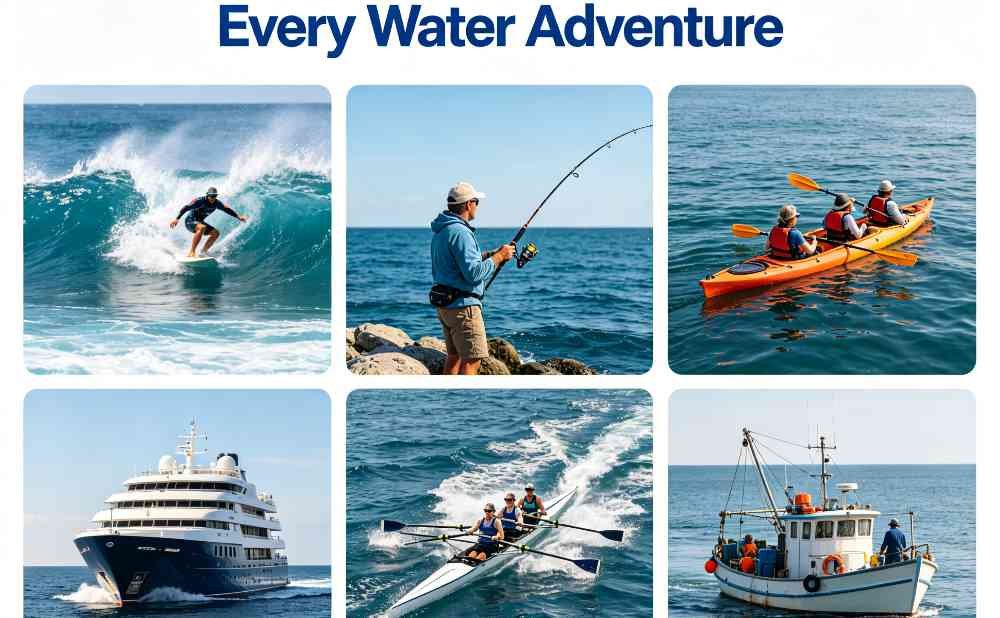
But communication needs vary wildly depending on the vessel and the environment. Let’s break down how marine communication gear actually fits into real-world scenarios, and what specific features keep your crew safe and connected.
1. Kayaking, Rowing, and Small Open Boats: Surviving the “Drop”
When you are in a kayak or competing in a rowing match, you are intimately close to the water. The primary risks here are capsizing, constant splashing, and having extremely limited space on your gear.
Drop a standard device into a lake, and it sinks straight to the bottom. For these low-to-the-water scenarios, investing in a floating marine radio is an absolute necessity.
The Practical Solution: This is where a compact handheld like the Retevis RM15 makes sense. Built with an IPX7 waterproof rating, it survives full submersion. More importantly, it inherently stays on the surface. If you roll your kayak and your gear unclips, it bobs on the water waiting for you. Clipping a lightweight, buoyant device to your Personal Flotation Device (PFD) ensures that even if you separate from your boat, your ability to call for help stays on your person.
2. Offshore Fishing and Sailing: Battling the Elements
For saltwater anglers and sailors, the challenges shift. You are constantly dealing with roaring outboard motors, howling winds, and offshore weather systems that change without warning. You need to coordinate with other boats to find the fish, but you also need instant updates on incoming squalls.
One of the biggest frustrations sailors mention on forums is a muffled speaker after a wave crashes over the bow. Water gets trapped in the speaker grill, making incoming transmissions completely unintelligible.
The Practical Solution: You need gear with dedicated weather alerts and water-clearing technology. The RM15 includes one-touch access to NOAA weather channels and alerts, letting you know exactly when to pull the lines and head for the marina. To solve the muffled audio problem, it features a vibration water-draining function. A quick shake and a buzz clear the speaker grill, ensuring that when the Coast Guard or a buddy on the next boat calls, the audio cuts clearly through the engine noise.
3. Yachts and Medium-to-Large Cruisers: The Essential Backup
If you captain a larger yacht or a cruise ship, your vessel is almost certainly equipped with a fixed-mount communication system, wired directly to the ship’s battery with a massive antenna on the mast. So, why keep a handheld on board?
It comes down to deck communication and worst-case scenarios. Communicating clearly between the helm and a crew member at the bow during docking can prevent thousands of dollars in gelcoat damage. More critically, if your vessel experiences a total electrical failure, or an emergency forces you to abandon ship, that expensive fixed-mount setup is dead in the water.
The Practical Solution: A rugged handheld is the cornerstone of any proper ditch bag. Keeping an RM15 fully charged at the helm provides a reliable backup that operates entirely independently of the ship’s power grid. It’s also incredibly handy to pass off to the crew for clear, line-of-sight communication when anchoring or navigating tight, crowded marinas.
Pro Tips: Know the Rules of the Water
Having the right gear is only half the battle. If you are new to marine communications, respect these universal rules:
Channel 16 is sacred: Channel 16 is strictly for distress and hailing. Do not use it to chat about the fishing bite. Once you establish contact with another boat on 16, immediately switch to a working channel (like 68, 69, 71, or 72).
Stop doing radio checks on Ch 16: The Coast Guard actively requests boaters to use Channel 9 (in the US) or designated automated check channels for testing equipment.
Know your emergencies: Call MAYDAY for immediate, grave threats to life or vessel (e.g., sinking, on fire). Call PAN-PAN for urgent situations that aren’t immediately life-threatening (e.g., engine failure while drifting toward a hazard).
The Bottom Line
The water is unforgiving. Whether you are slicing through a calm river on a kayak, battling offshore swells for tuna, or enjoying a weekend cruise with the family, communication is the one critical variable you can control.
Don’t wait until you’re staring at “No Service” on your smartphone to realize you need a dedicated floating marine radio. Gear up properly, know your equipment, and respect the water. Safe boating.
Views: 3