
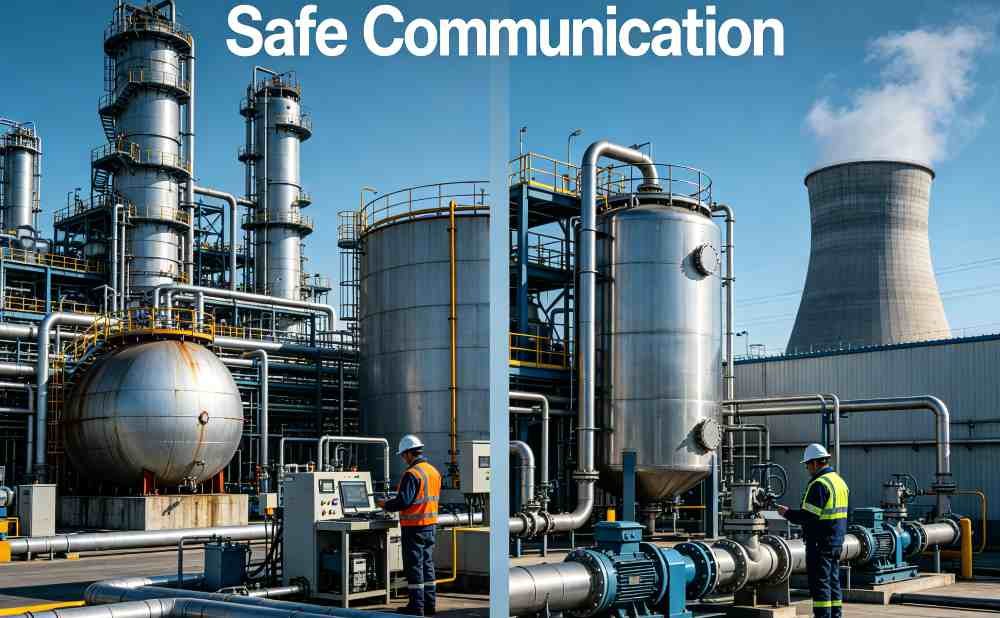
Oil, gas, and flammable dust create constant explosion hazards in refineries and chemical plants. Discover why explosion-proof radios are critical for worker safety, regulatory compliance, and uninterrupted high-risk facility operations.
In refineries and chemical plants, where volatile oil and gas vapors, flammable gases, and combustible dust fill the air every day, even a tiny spark can trigger a catastrophic explosion. For frontline workers and safety managers, communication is not just a matter of efficiency—it’s a matter of life and death. Ordinary industrial radios, which may generate sparks when turned on, used, or charged, are simply not worth the risk. In these high-risk environments, explosion-proof radios are not an option, but an absolute necessity.
Let’s break down the four most common high-frequency work scenarios in refineries and chemical plants, and why reliable explosion-proof communication is critical for each:
1. Production Inspection
Inspectors work in areas with heavy oil pollution and strong equipment interference. They need radios that can maintain stable communication without frequent charging, and whose bodies can resist oil corrosion and dirt. A single communication failure or equipment breakdown during inspection could lead to missed safety hazards.
2. Equipment Maintenance & Repair
Maintenance sites are often narrow and complex, with various equipment and pipelines. Clear, anti-interference communication is essential to quickly convey fault information and repair instructions, ensuring that maintenance work is carried out safely and efficiently, and avoiding secondary accidents.
3. Cross-Team Collaboration
Refineries and chemical plants cover large areas, with scattered teams (inspection teams, maintenance teams, central control teams, etc.). Long-distance stable communication is required to ensure seamless collaboration between teams, avoiding delays in work and potential safety risks.
4. Emergency Evacuation
In the event of emergencies such as flammable gas leaks or fires, clear and uninterrupted evacuation instructions are crucial. Any stutter or interference in communication could cost precious time and even lives.
The RETEVIS MateTalk E2 explosion-proof radio is specifically designed to address these pain points, providing comprehensive protection for frontline workers in refineries and chemical plants:
Dual Explosion-Proof Certifications for Maximum Safety
Equipped with both explosion-proof certification (Ex ib IIB T4 Gb/Ex ib IIIC T130℃ Db) and ATEX certification (II 3GD/ Ex ic IIC T4 Gc/ Ex ic IIIC T100 Dc), the E2 is fully suitable for Zone 1/Zone 2 flammable and explosive environments. It eliminates the risk of spark generation from the source, ensuring safe communication in high-risk areas.
Anti-Interference & High-Definition Communication
Powered by DMR digital technology, the E2 effectively avoids interference from plant equipment, delivering clear and noise-free calls even in complex environments. It supports long-distance communication, perfectly meeting the needs of cross-team collaboration in large-scale refineries and chemical plants.
Long Battery Life for Shift Work
The E2 features a long-lasting battery that supports 24-hour shift work in refineries and chemical plants. Workers don’t need to worry about frequent charging, ensuring uninterrupted communication throughout their shifts.
Durable & Oil-Resistant Design
With an IP68 high protection rating, the E2 has passed rigorous reliability tests including bare machine drop, water resistance, and plug-in tests. Its sturdy body is resistant to oil, corrosion, and dirt, making it ideal for the harsh working environments of refineries and chemical plants.
Compliance Is Non-Negotiable for High-Risk Plants
Safety inspections in high-risk refineries and chemical plants have strict requirements: both certified operators and compliant explosion-proof equipment are indispensable. The RETEVIS MateTalk E2 has passed CE and FCC filings, meeting relevant compliance standards. It helps enterprises avoid fines, production suspensions, and other risks caused by non-compliant equipment.
How to Choose the Right Explosion-Proof Radio for Refineries & Chemical Plants?
Many enterprises mistakenly choose ordinary industrial radios, ignoring the core differences between them and explosion-proof radios:
- Ordinary industrial radios lack explosion-proof certifications and are prone to spark generation, posing serious safety risks;
- They have no professional protection, making them vulnerable to oil corrosion and damage in harsh environments;
- Poor anti-interference performance leads to unstable communication in complex plant environments.
When selecting explosion-proof radios, prioritize the following key points: explosion-proof certifications (suitable for oil, gas, and dust environments), protection rating (IP66 or higher), battery life (adaptable to shift work), and anti-interference performance. The RETEVIS MateTalk E2 meets all these requirements and offers a higher cost-performance ratio compared to top brands.
In refineries and chemical plants, communication safety is the first line of defense for production safety. The RETEVIS MateTalk E2 is not just a compliant communication device—it’s a reliable safety guarantee for frontline workers. Choose the right explosion-proof radio, and protect the lives of your team and the safety of your plant.
Views: 1